
Better translations start with the source.
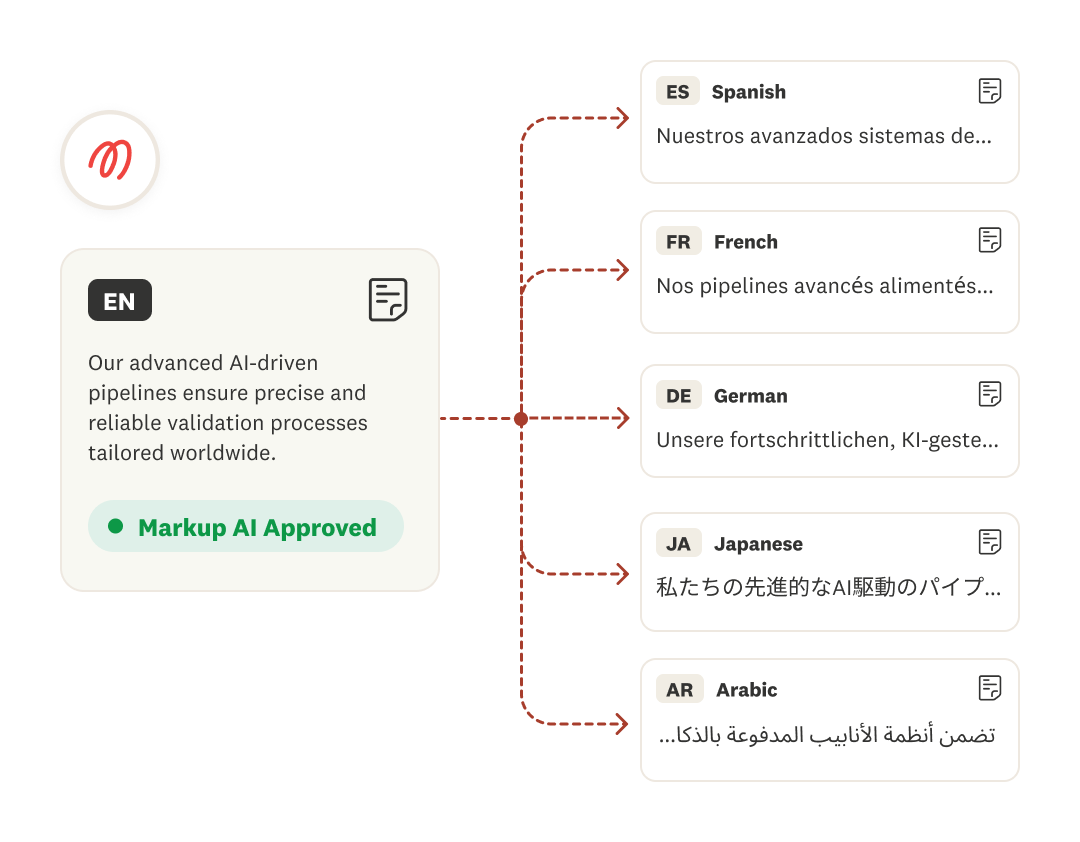
Every flaw in your source content gets translated and paid for in every language you publish. Markup AI catches them before they're translated.
THE PROBLEM
One unclear sentence in English becomes multiple expensive problems.
Localization budgets get scrutinized constantly. Source content rarely does. The quality of your English source content is the single biggest variable in what translation costs you and how good the result is, and most teams have no way to measure it before they hand content over.

Every flaw in the source content multiplies
An ambiguous sentence doesn't stay one problem. It becomes one problem in every target language, each with its own review cycle, its own correction, and its own invoice.

Inconsistent terminology destroys translation memory leverage
Three different words for the same component mean three different translations. Your translation memory bloats, and you pay for costs you could have avoided.

Content fluff costs more everywhere
Translation is often priced per word and now per token. Extra text that may cost you nothing in English costs you real money multiplied across every language and every update. Small increases in fuzzy matching can produce significant translation cost savings.

Ambiguity turns into feedback cycles
When linguists can't tell what a sentence means, they may ask the writer or just take their best attempt at translation. Those questions route back to a writer who may have moved on weeks ago, and the timeline slips while everyone waits. Or worse, a poor or incorrect translation gets published.

Idioms and cultural references don't survive the trip
Phrases, analogies, and humor that read naturally to a US audience become confusing, meaningless, or occasionally embarrassing once localized — and nobody catches them until in-country review.

AI is producing more source content, not better source content
Your input volume has multiplied. The quality bar on that input hasn't moved, and machine translation faithfully reproduces whatever you feed it.
THE GAP
You measure translation quality. Nobody measures source quality.
Every localization program has quality control on the output but rarely on the input.
What fixing it downstream costs
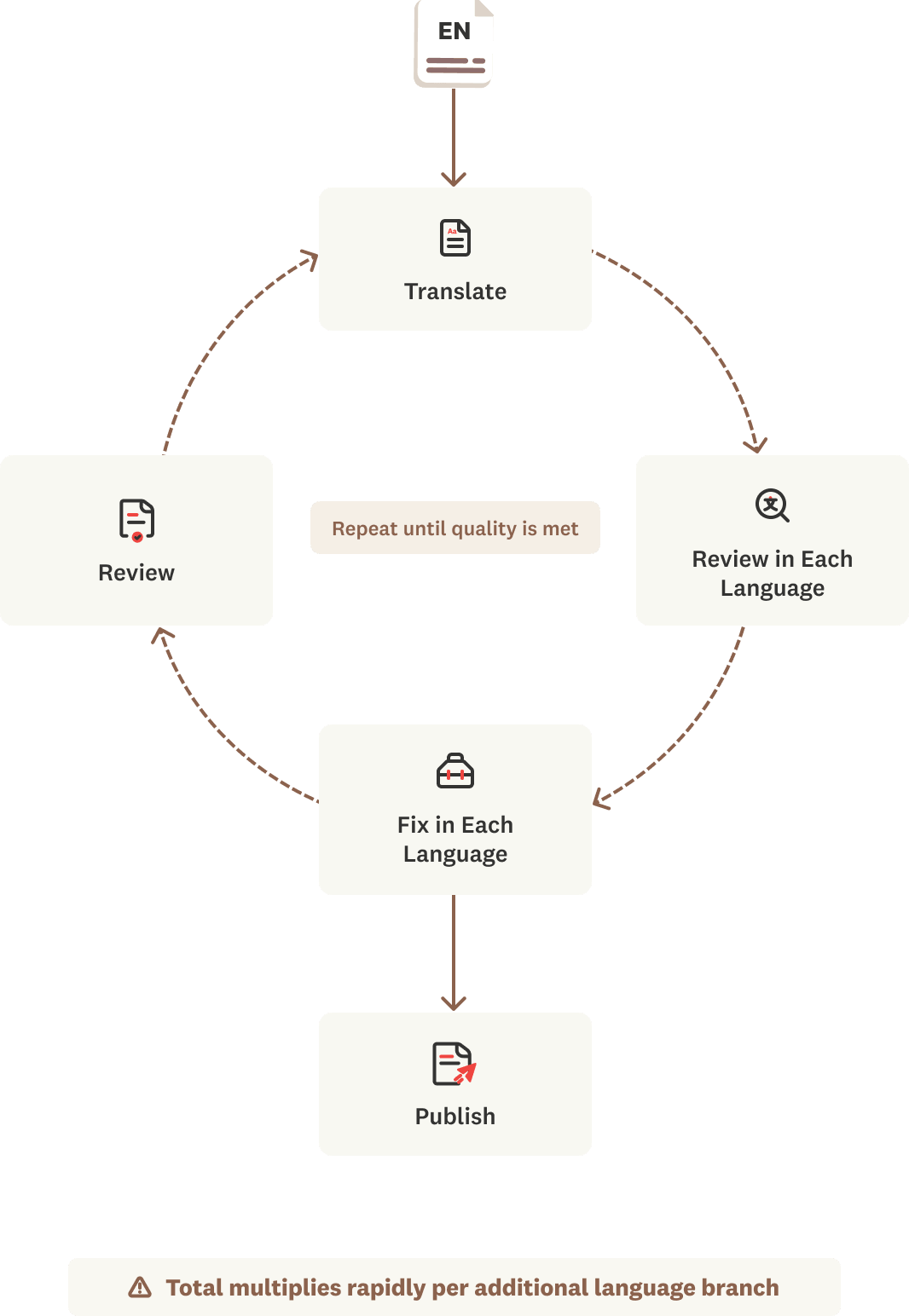
An error caught in review gets corrected once per language. Multiply by the number of markets, add the re-review, add the republish, add the delay. The same fix, paid for repeatedly.
What fixing it at the source saves
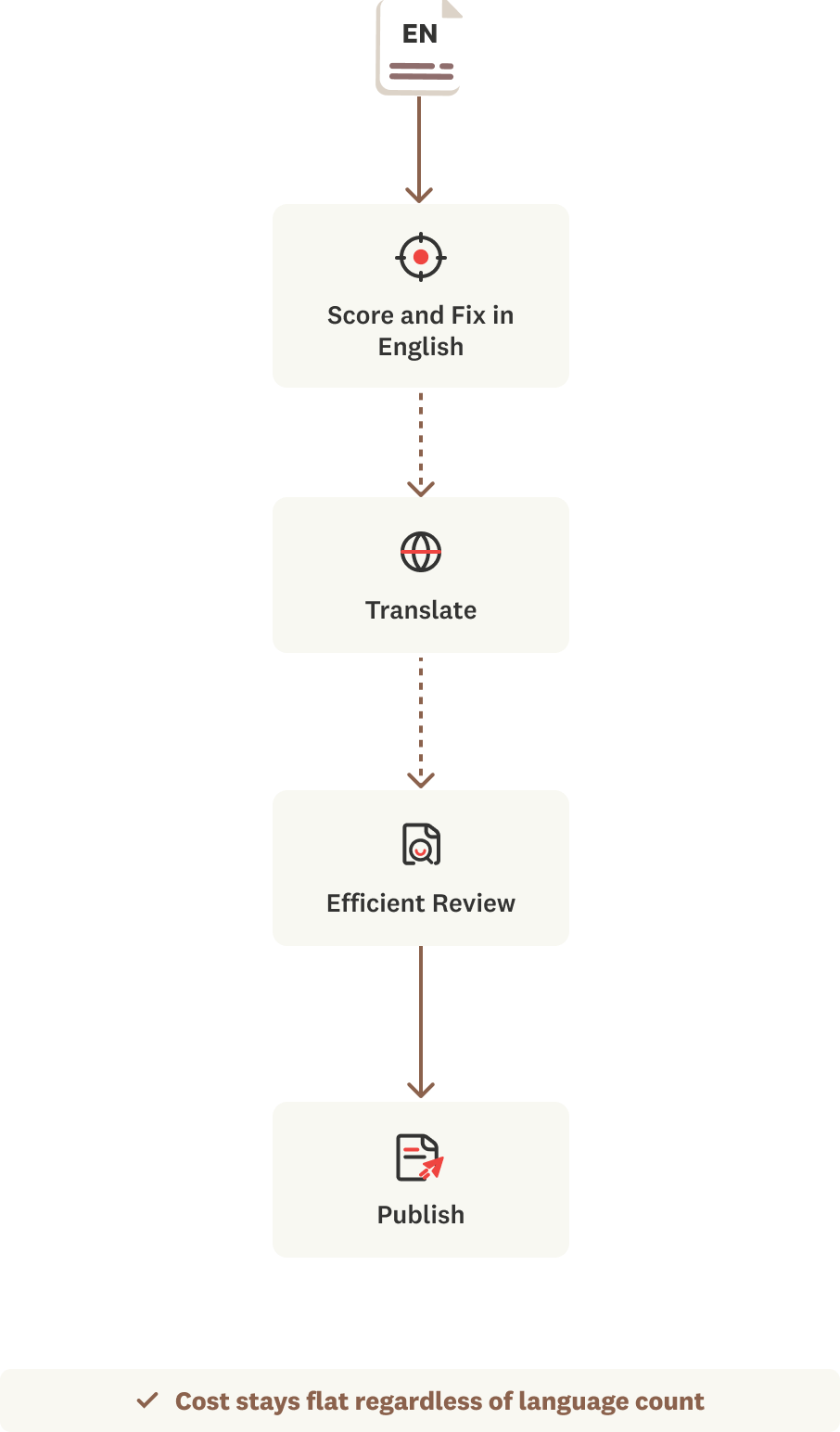
One correction, before a single word is translated. This reduces the editorial review bottlenecks and catches issues before they become a costly fix down the production line.
Teams don’t work downstream because they prefer it. They do it because source readiness has never been measurable. Teams need a deterministic way to confirm content is ready for translation.
THE SOLUTION
Score your source content before it costs you in multiple languages.
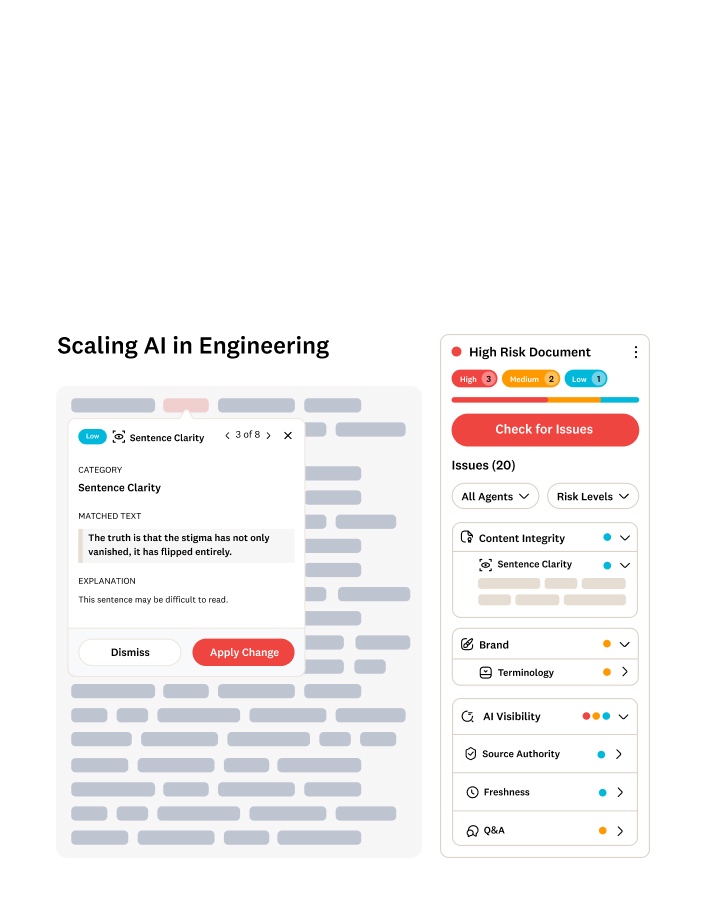
Markup AI checks content before it enters your localization pipeline. Content Guardian Agents℠ scan every draft for the specific qualities that determine translation cost and quality such as terminology consistency, sentence clarity, structural cleanliness, and language that won't survive localization — then score it and rewrite what falls short.
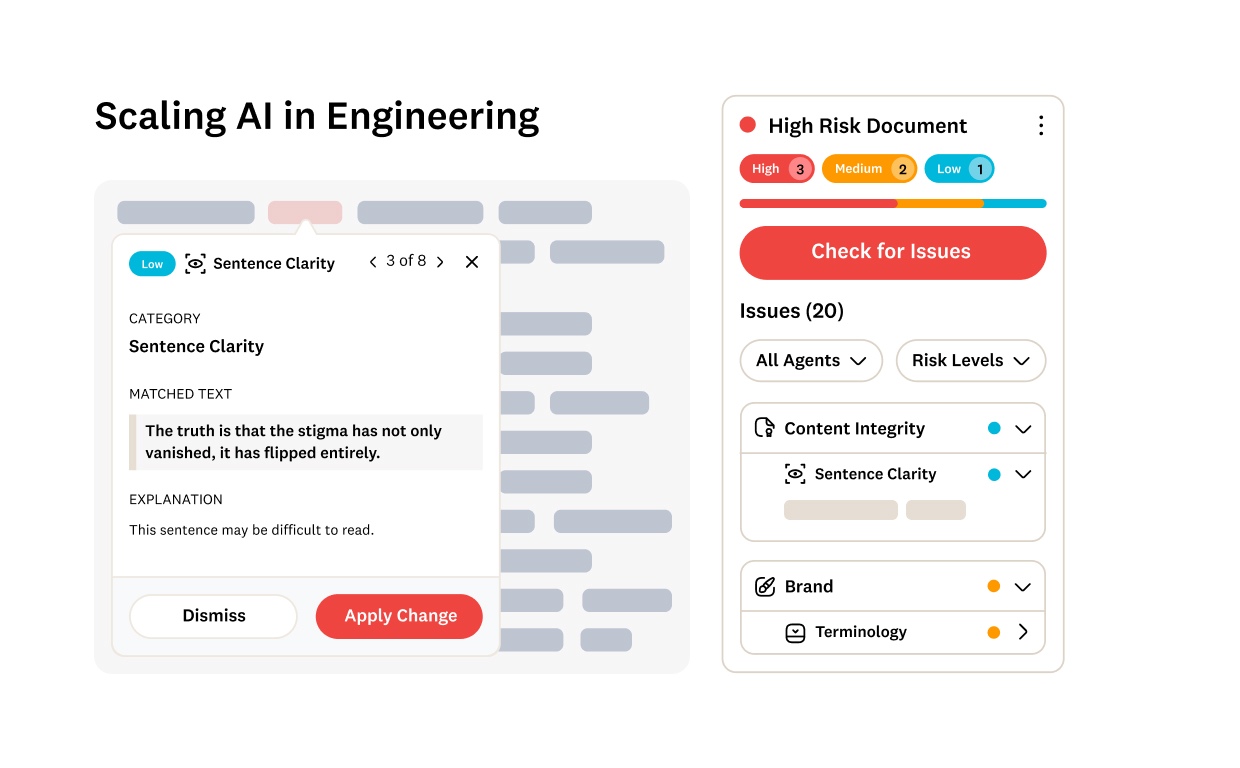
A readiness score, not a guess
Every piece of source content is scored against your standards before handoff. Set a threshold, and nothing enters the pipeline until it clears. "Is this ready to translate?" stops being a judgment call and becomes a deterministic assessment.
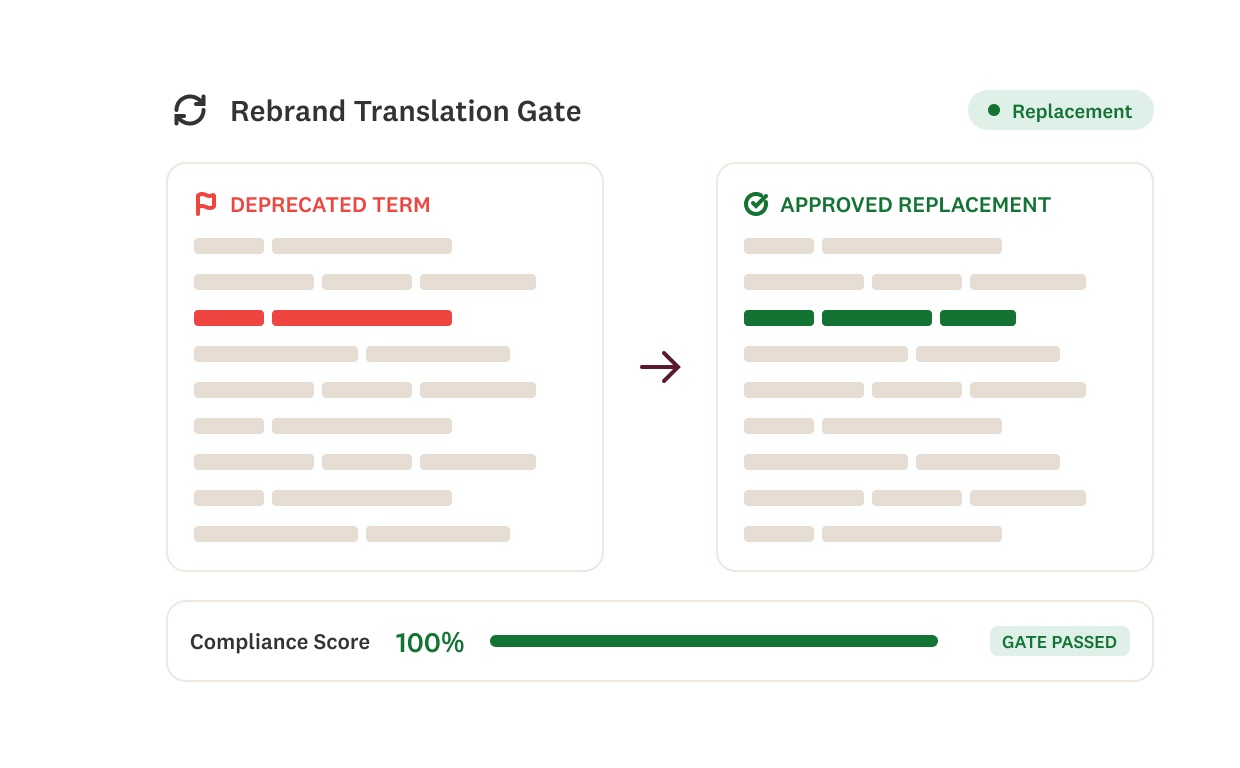
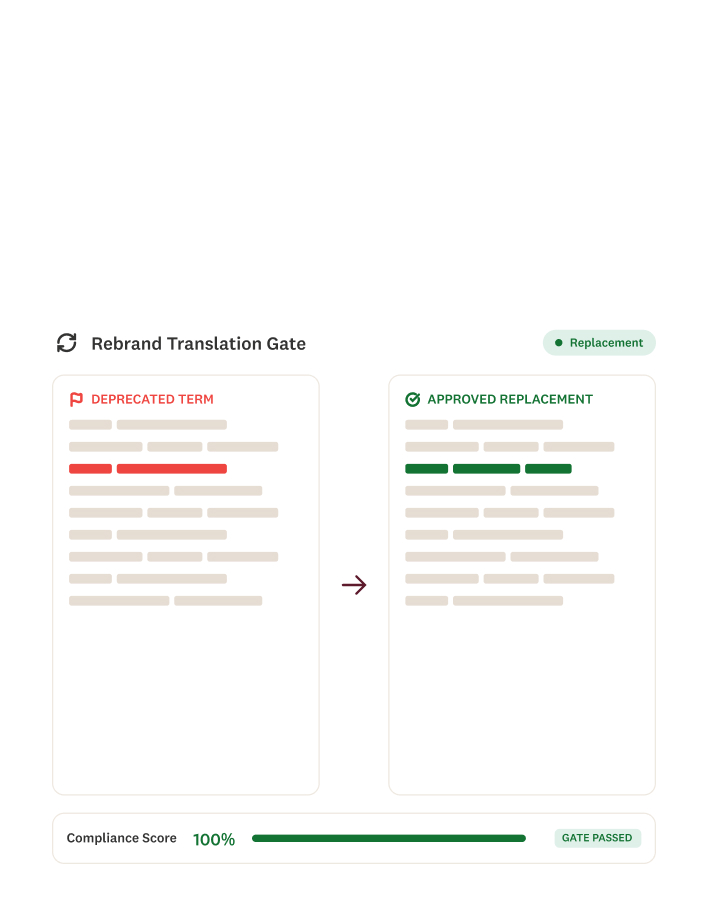
Terminology that pays off downstream
Globally available terminology, enforced across every writer, every contractor, and every AI draft. Consistent source terminology is what keeps term bases accurate and translation memory efficient. This keeps translation efforts from producing three different names for the same product.
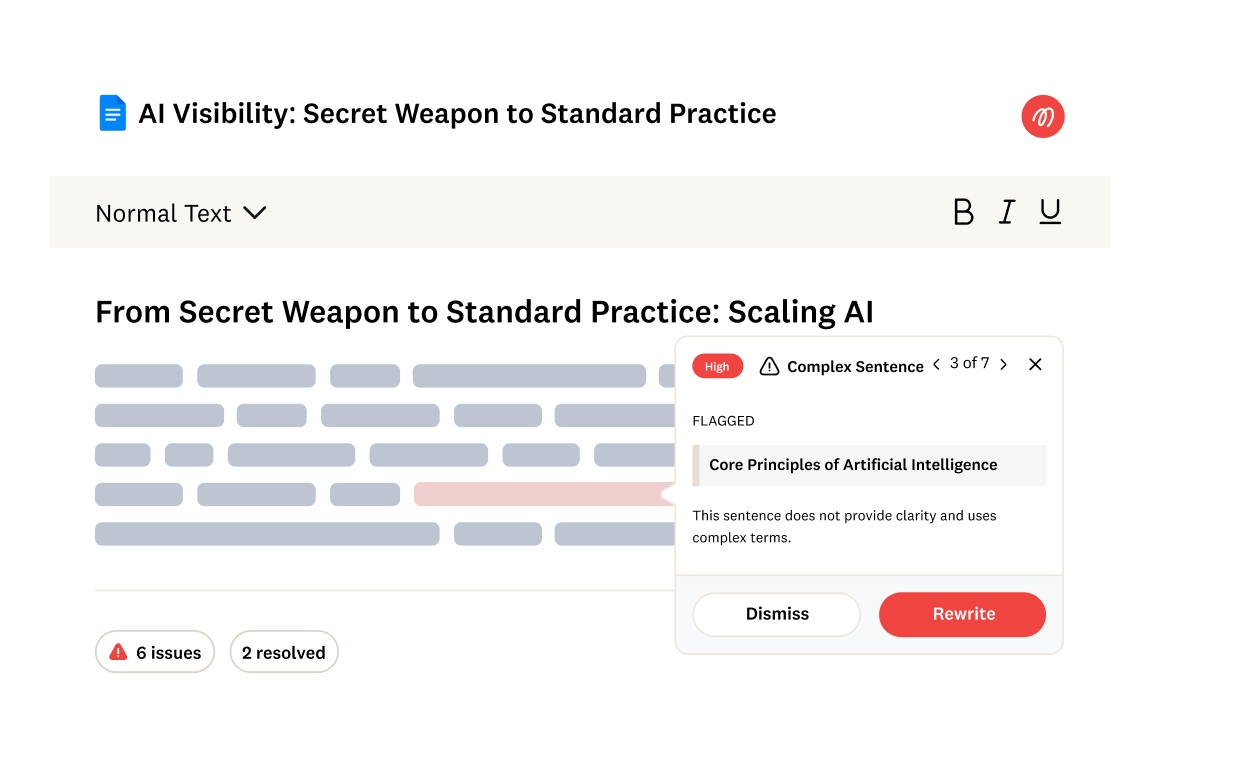
Clear content translates cleanly
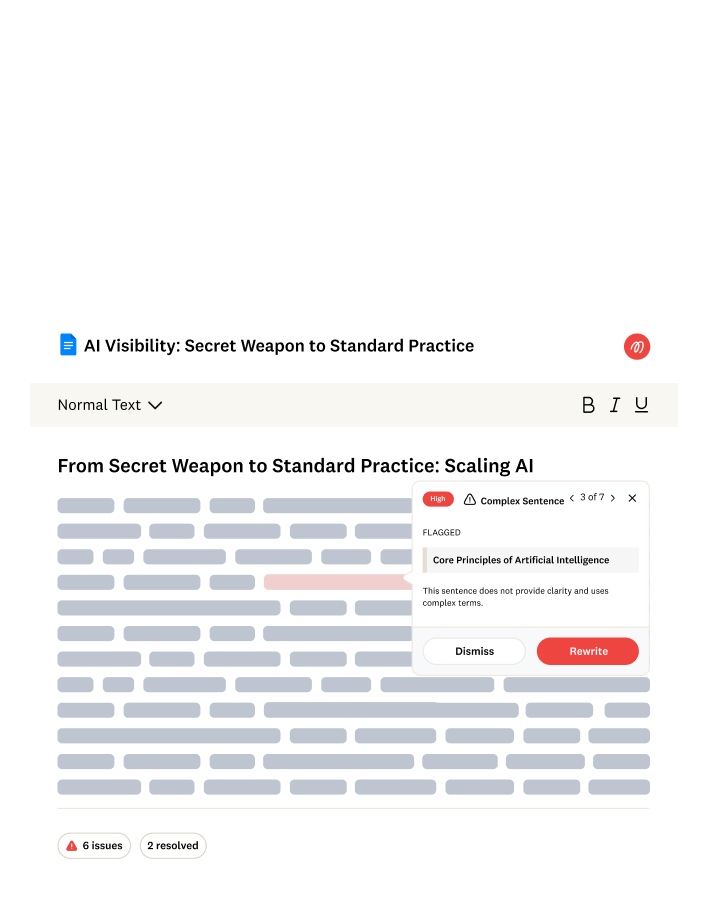
Long, ambiguous, idiom-heavy sentences are where translation quality breaks down and query cycles start. Markup AI flags them at the point of writing, when a rewrite costs minutes rather than weeks.
HOW IT WORKS
Readiness built into writing, not bolted onto handoff.
Markup AI runs where your source content is created. Nothing new for writers to open, and no pre-handoff scramble.

Connect Markup AI to where content gets written
Google Docs, Word, your CMS, Claude, your docs repository, or your own pipeline through API or MCP.
Define what translation-ready means
Upload your approved terminology, style guide, and clarity standards. Set the score every piece has to hit before it's eligible for handoff.

Score, rewrite, hand off clean
Content that clears the bar is good to translate. Content that doesn’t clear it gets detailed improvement suggestions and comments. Your writers or an LLM can apply them, or you can route them to editorial for review.
ROI Value Impact Calculator
Enter your number of writers, working hours, and hourly rate to estimate your efficiency gains.
Our ROI calculator turns performance gains into estimated annual savings.
Conservative Annual Savings
Frequently asked questions
No. Markup AI improves the English source content that goes into translation. It works alongside your translation tools, translation memory, and language service providers rather than replacing any of them — by making sure what you hand them is clean, consistent, and ready.
Three ways. Word count drives per-word pricing, so wordy source content costs more in every language. Terminology consistency drives translation memory match rates, so inconsistent source terms mean fewer matches and higher rates. And ambiguity drives query cycles and rework, which cost time on top of money.
Consistent terminology, clear and reasonably short sentences, unambiguous phrasing, clean structure, and no idioms, cultural references, or wordplay that depend on a specific audience to make sense. Markup AI scores content against these criteria and rewrites what doesn't meet them.
Yes, and arguably more than with human translation. Machine translation reproduces the qualities of its input faithfully, including the ambiguity. A human linguist might catch an unclear sentence and ask about it. A model will translate it confidently and wrongly. Source quality is the largest controllable variable in machine translation output.
Readability tools score against generic formulas. Markup AI scores against your standards — your approved terminology, your style guide, your defined clarity thresholds — and rewrites content to meet them rather than just reporting a grade level.