
Validate what your AI writes. Before anyone else reads it.
Most tools tell a model how to write. Markup AI checks whether it actually did — then rewrites what doesn't pass.
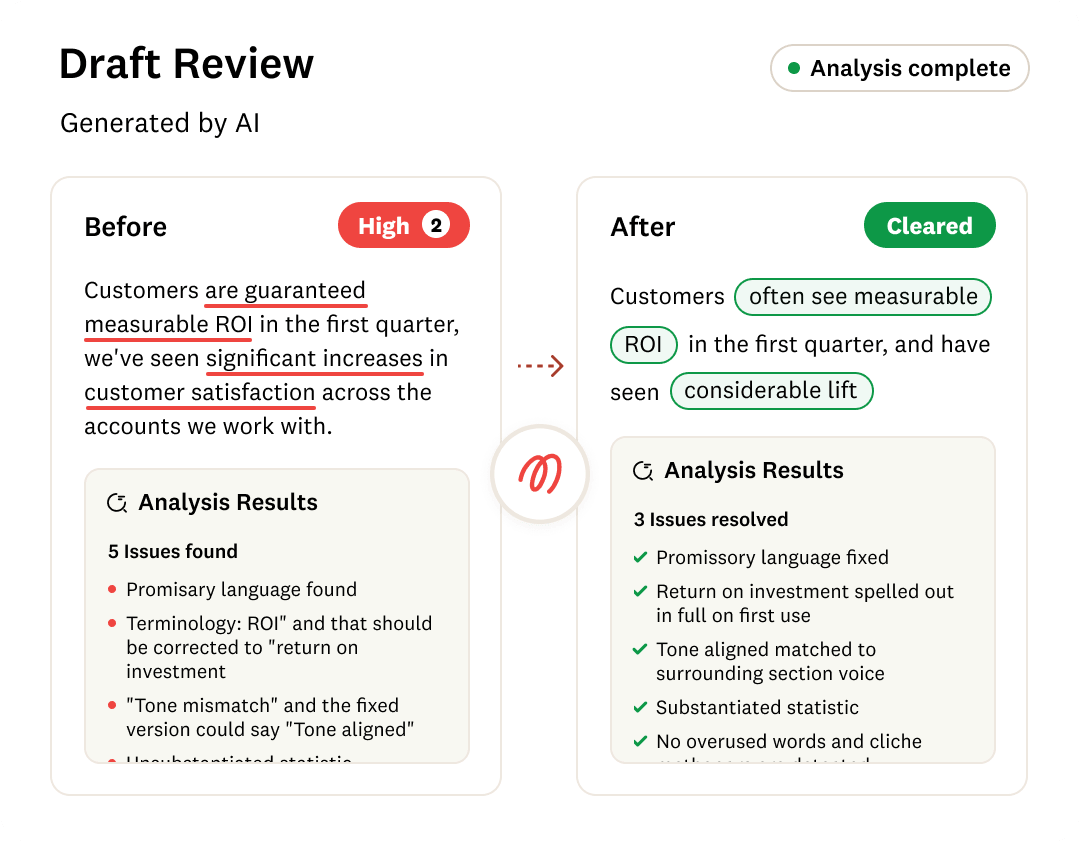
THE PROBLEM
AI made your content creation faster. Your validation can’t keep up.
Every team can create content in AI-powered writing tools and agents. Almost none of them have a consistent way to prove that those outputs meet their standards. Review and validation is still one person reading a draft and making a judgment call. That worked at a few pieces a week. It doesn't work at today’s volumes.

Your brand guidelines live in the prompt, not in a check
Telling an LLM how you write isn't the same as confirming it wrote that way. Instructions shape the output. Nothing verifies it.

AI can't grade its own homework
Asking a model to review its own output is a closed loop. It can't check claims against your data, and it will confidently defend an error it just made.

Fluency isn't accuracy
LLM output reads with the same confidence whether a statistic is real or invented. Polish is the one signal you can't use to judge correctness.

Every model drifts differently
Swap a model, change a prompt, add an agent, and your output quality shifts silently. Nothing tells you it happened until a reader finds it.

Manual review erases the gains
If a human has to read every AI draft line by line, you've moved the bottleneck rather than removing it. You can't scale a spot-check.

No proof, no audit trail
When legal or a customer asks whether content met your standards, "we reviewed it" isn't an answer. You need a record of what was checked, what was flagged, and what changed.
THE GAP
Telling a model your standards isn't the same as checking it met them.
Prompt-based brand alignment is an input. It's probabilistic, unmeasured, and invisible when it fails.
What a prompt does
It describes your voice, terminology, and rules to the model. Influences the draft. Produces output that usually sounds close enough to pass a quick read.
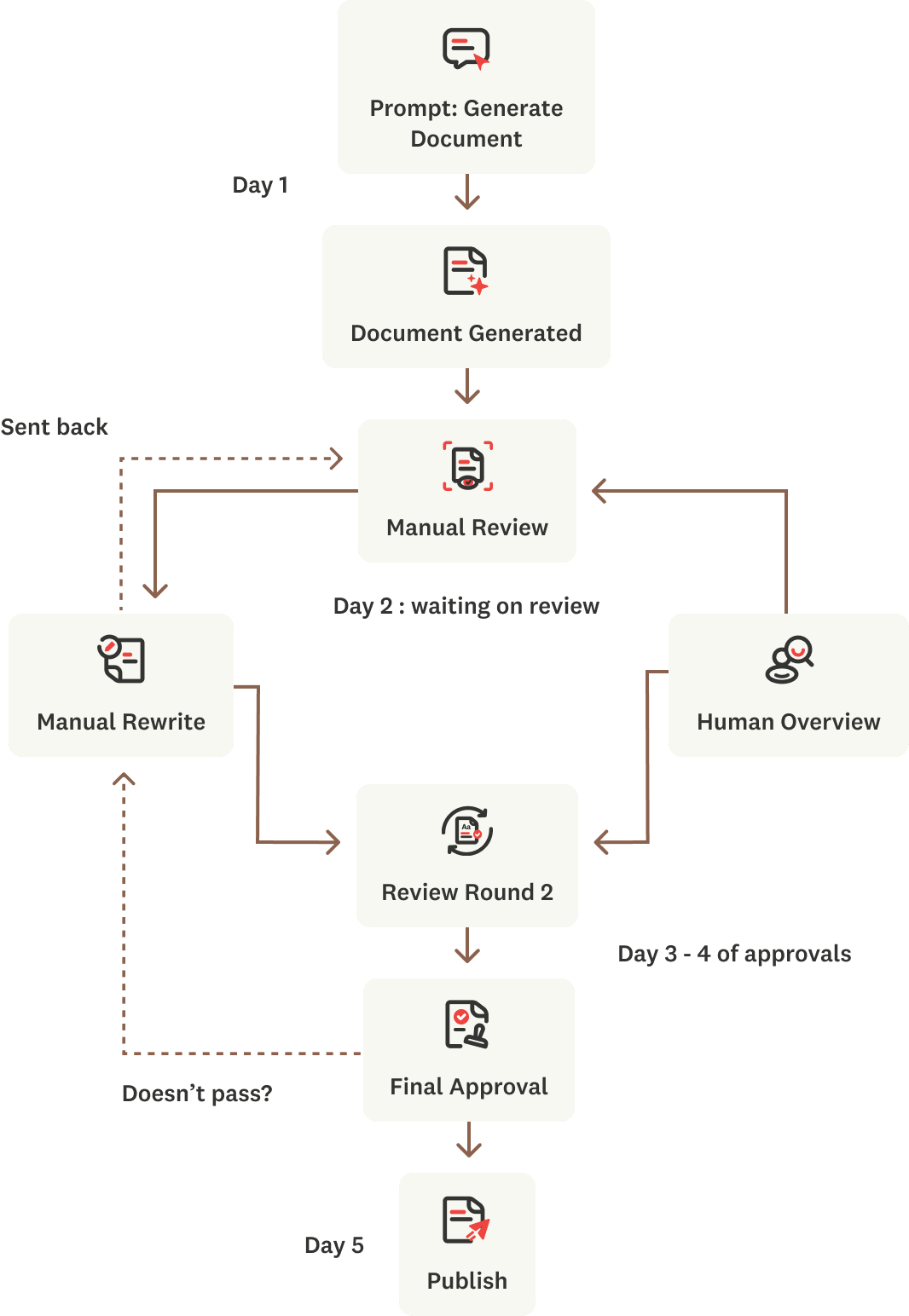
What a check does
It compares the finished output against your actual standards. Returns a score. Names what failed and why. Checking flags issues and guides rewriting based on feedback. Same start, faster publishing.
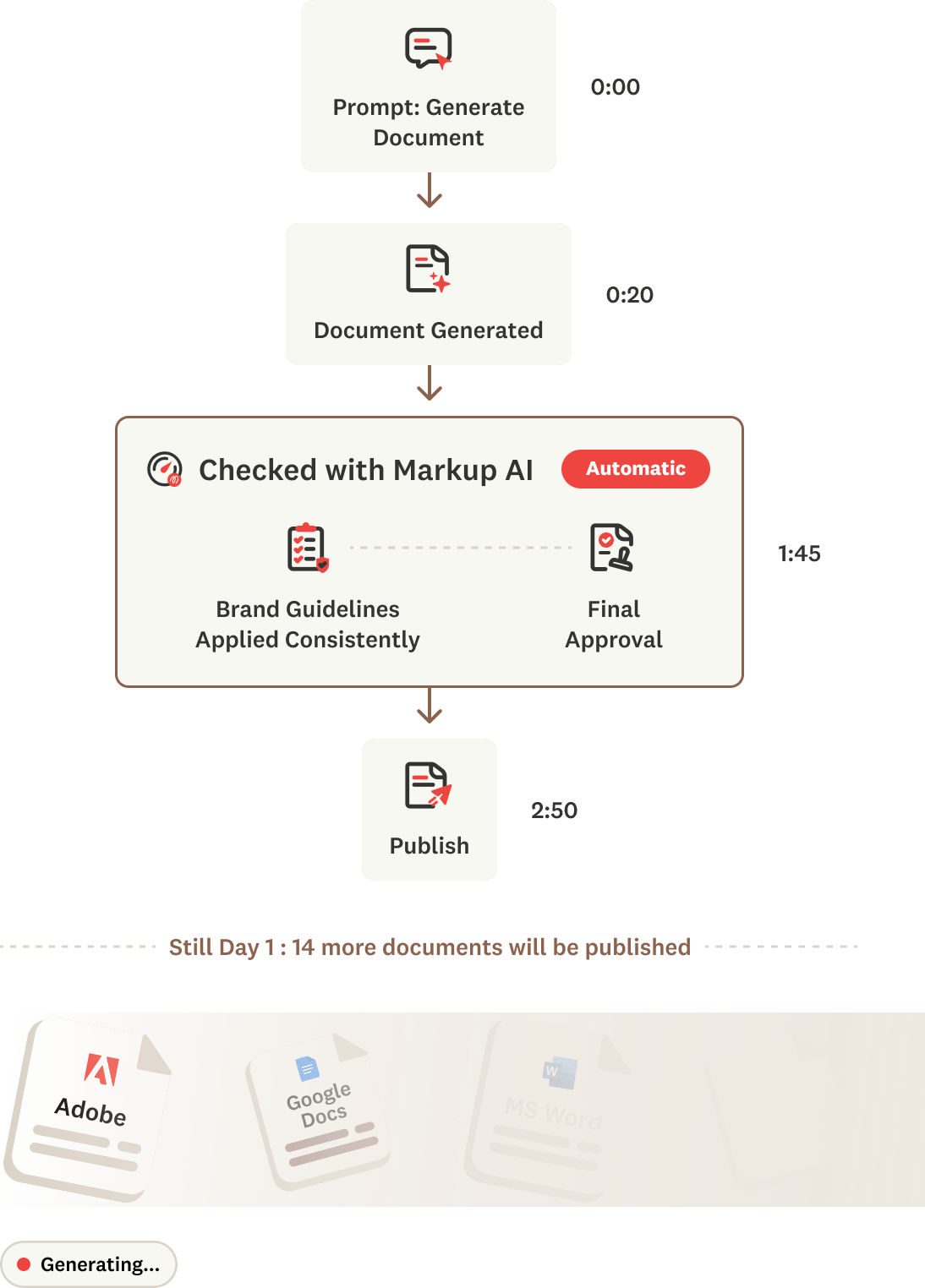
The difference shows up the moment something goes wrong. When a prompt-aligned draft uses a deprecated product name or overstates a claim, nothing flags it. The instruction was followed loosely, the output looked fine, and the error published. Verification is the step almost every AI content stack is missing.
PROOF
The gap between what teams believe and what they do
The gap between AI confidence and the need for independent validation.

of marketers believe AI models can adequately check their own work.

80%
of their teams still run manual reviews anyway.

of C-suite leaders say independent content guardrails would be valuable for validating AI output.
Source: The AI Trust Gap, Markup AI
THE SOLUTION
An independent layer that scores every output — not the model checking itself.
Markup AI sits outside the model. Content Guardian Agents℠ scan every AI-generated draft against your brand voice, terminology, claims, and compliance requirements, score it against your defined thresholds, and rewrite what doesn't pass. The same standard applies whether the draft came from your CMS, an internal agent, or a model you swapped in last week.
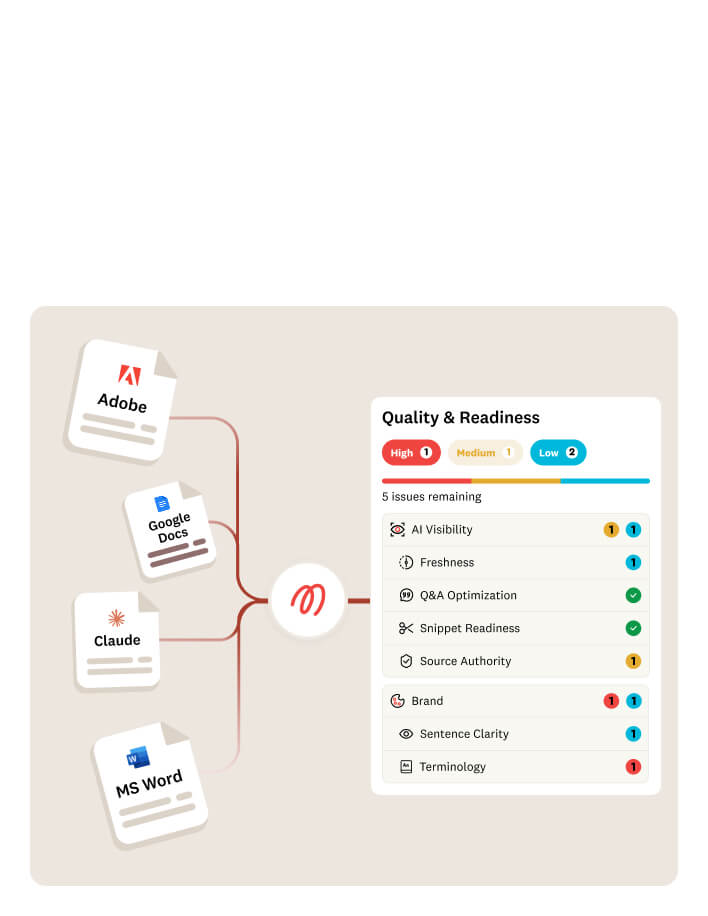
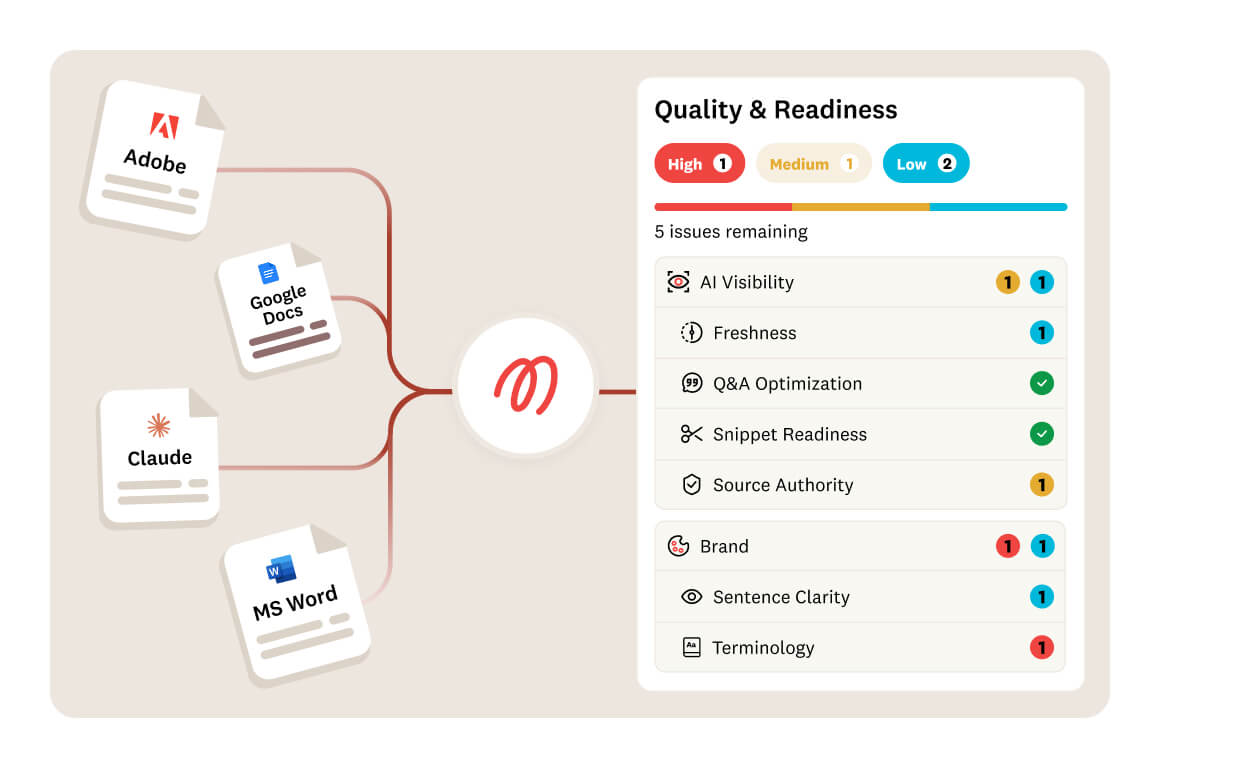
Your rules are not an opinion
Every output gets an objective, criteria-based score against your standards — terminology, tone, clarity, accuracy, structure. You can set a threshold, track it over time, and show exactly why a piece passed or failed. Validation becomes a number your team can act on instead of a debate.
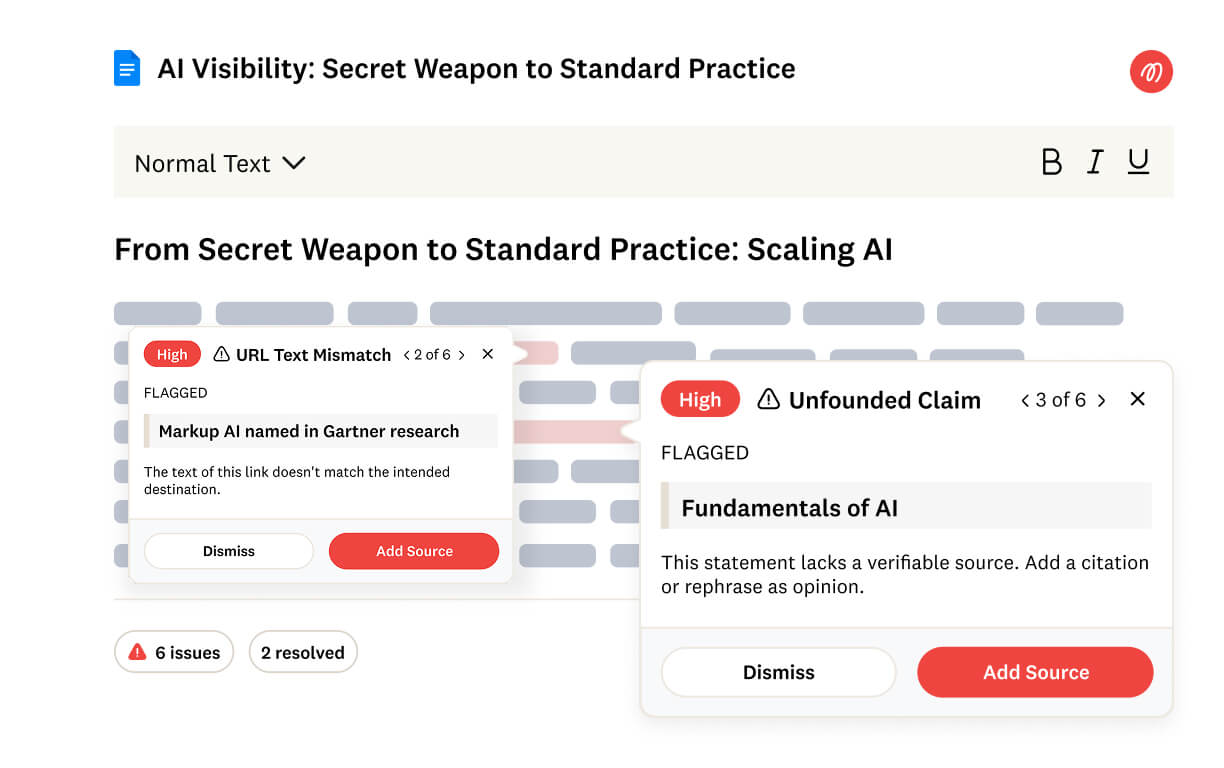
Claims checked, not assumed
Content Guardian Agents flag unsupported statements, stale statistics, and claims that don't hold up — the failures that read perfectly and are still wrong. Every check runs against your standards, from terminology to brand voice.
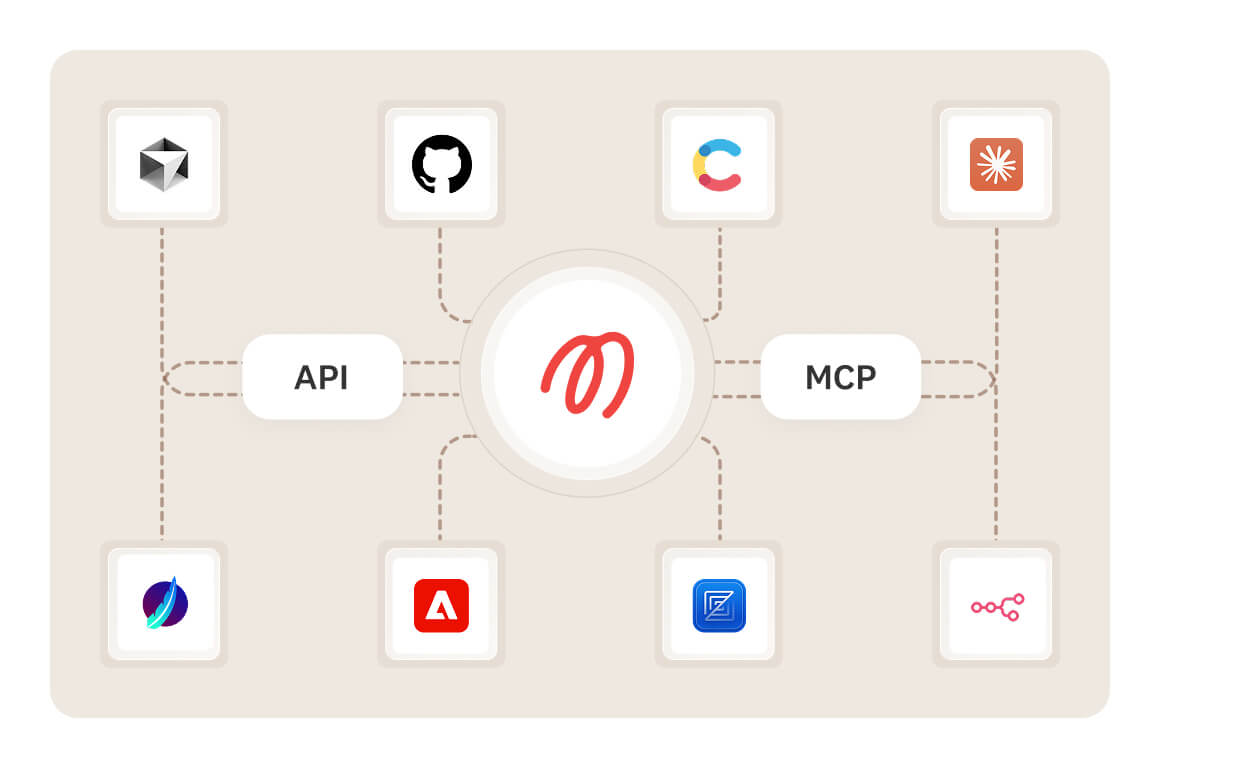
One standard across every model
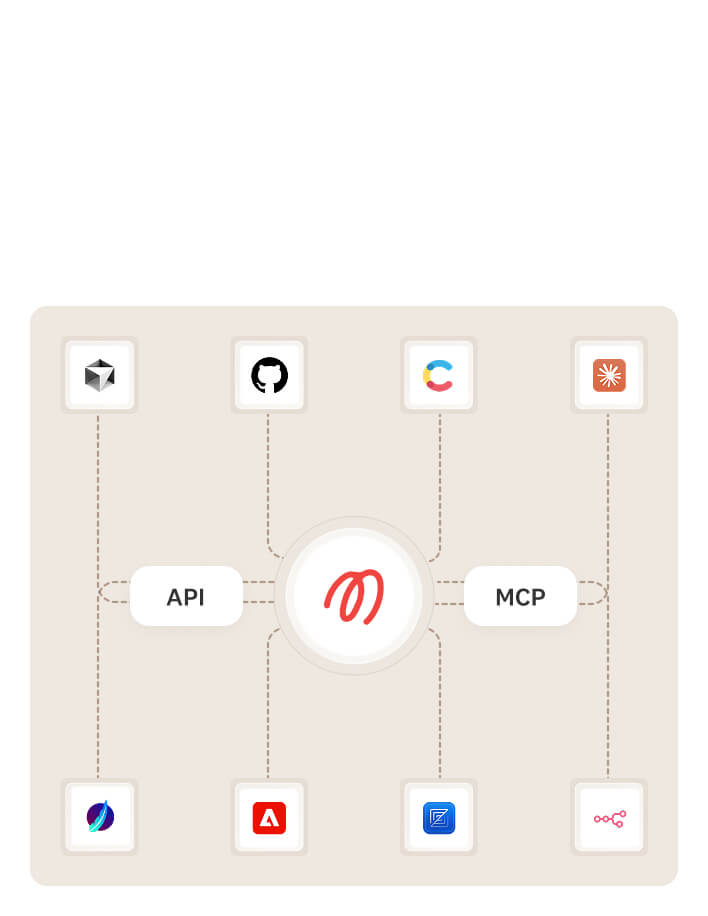
Markup AI connects through API and MCP to the tools and pipelines where your content is actually generated. Change models, add an agent, onboard a contractor — your standards don't move. Update them once and every future output is validated against the new version.
HOW IT WORKS
Validation that runs itself.
Markup AI plugs into the workflows you already have. There’s no new tool for your team to remember to open.

Work where you create
API, MCP, CMS, Google Docs, Word, or your own pipeline. Validation happens at every stage of the content lifecycle, not at the end of a review queue.

Define what valid means
Upload your style guide, approved terminology, brand voice docs, and compliance requirements. Set the score threshold that content has to clear.

Content control at scale
Content that passes moves forward. Content that falls short gets rewritten automatically. Content that needs a person gets routed to one — with the specific issues already flagged.
ROI Value Impact Calculator
Simply input your number of writers, working hours, and hourly rates to see an estimate on your efficiency gains.
Our ROI calculator turns performance gains into projected annual savings based on customer impact, giving you an estimated view of your opportunity.
Conservative Annual Savings
Frequently asked questions
Validating AI-generated content means checking it against a defined set of standards before it publishes — factual accuracy, approved terminology, brand voice, structure, and any compliance requirements that apply. It's different from proofreading. A draft can be well written and still fail validation because it makes an unsupported claim or uses a deprecated product name.
Not quite. Most AI content platforms accept your brand guidelines as part of the prompt — the model is told how to write, and the output usually reflects that instruction. But nothing confirms it did. There's no score, no flag when things drift, and no record of what was checked. Markup AI adds the verification step: it takes the finished output and measures it against your actual standards, then rewrites or flags what falls short. Instruction and verification are different jobs, and most stacks only have the first.
Not reliably. A model has no external reference for your proprietary data, your brand voice, or your industry's current compliance requirements. Asking it to review its own work can also reinforce the original error — models will often defend a hallucinated claim when prompted to check it. Validation needs an independent layer with your standards encoded in it.
Grammar tools check mechanics. AI detection tools estimate whether a machine wrote something. Neither tells you whether the content meets your standards. Markup AI scores content against the criteria you define — your terminology, your voice, your claims policy, your compliance rules — and rewrites what doesn't pass.
Yes. Markup AI is model-agnostic. It connects through API and MCP to the environments where content is generated, including AI assistants, agents, CMS platforms, and custom pipelines. The same standards apply regardless of which model produced the draft.
Yes. Every scan produces a score and a record of what was flagged and what changed. That gives content ops, legal, and compliance teams an auditable trail rather than an assurance that someone looked at it.